[more link=”https://www.bootsnall.com/rtw/faq-–-what-to-do-with-all-your-stuff-while-youre-gone.html”]Next RTW FAQ-What to do with All Your Stuff[/more]
- What Are The Benefits Of Bringing A Laptop?
- What Are The Downsides Of Bringing A Laptop?
- What About Netbooks?
- Are iPads A Good Option?
- How Often Is WiFi Available in Hostels And Hotels?
- Do Many Hostels Have Computer Stations?
- How Widespread Are Internet Cafes?
- Should I Bring A Cell Phone?
- What Are The Benefits Of Bringing A Cell Phone?
- What Are The Pitfalls Of Bringing A Cell Phone?
- What About Skype?
What Are The Benefits Of Bringing A Laptop?
It’s nice to stay connected on the road, but there is a fine line between staying connected and wasting your time on the interwebs when you should be out exploring. A laptop is great to bring for many reasons-storing photos, blogging, skyping with family and friends, and entertainment options. There’s a lot of downtime, so it’s nice to be able to pull out the old laptop occasionally and watch a movie.
What Are The Downsides Of Bringing A Laptop?

As stated already, sometimes it’s easy to stay too connected, and travelers end up wasting days and weeks doing nothing on their computers instead of getting out and seeing the place they are visiting. We all know how easily it is to get sucked in. The cost of buying one and risk of it getting stolen, lost, or broken is another concern, as is the weight and bulk of having to lug one around.
What About Netbooks?
It’s possible to get a cheap, super lightweight netbook these days, for as low as $300. These do most things that a laptop does, but if you are planning on doing some serious blogging/writing/photo/video editing, they can start to get bogged down. Netbooks are a great option for travelers, though, and they can be used for all of the above tasks, they just might not be as efficient as your laptop at home.
Are iPads A Good Option?
Of course they are. Maybe a step down from a netbook as far as capabilities are concerned, but it’s possible to get a little fold up keyboard to help out. iPads are smaller and more lightweight and can be great for traveling, but the high cost is a major downfall.
How Often Is WiFi Available in Hostels And Hotels?
WiFi is spreading like wildfire all over the world, even in the most remote of places. Even when we did our RTW in 2008-2009, it was rare when we couldn’t find a hostel with WiFi, and most of the time it was free (hotels are starting to catch on, but many still charge). The free WiFi in hostels can cut down significantly on money spent in the internet cafe, so this is a major plus for the pro-laptop crowd.
Do Many Hostels Have Computer Stations?
Yes, more and more hostels these days have both WiFi and computer stations. They do typically charge, and that charge is on par with what an internet cafe in the same city charges. But not having to walk to an internet cafe and having all your stuff nearby in your room cuts down significantly on time spent on these tasks.
How Widespread Are Internet Cafes?
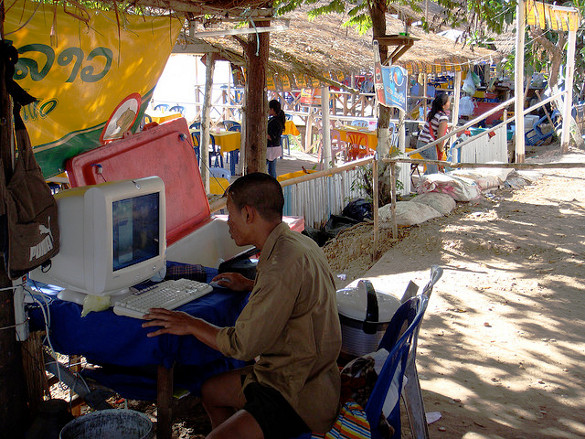
If you want, you can hop online after day 1 of hiking the Inca Trail, so that should tell you something. Internet cafes are everywhere, and in developing countries, the cost is minimal. But over the course of several months or a year, the fees certainly add up, especially if you’re spending time uploading photos to a site like Flickr on a poor connection. You definitely won’t have an issue finding internet cafes and staying connected when you want, but the cost and time of doing so is far greater than if you bring a laptop.
Should I Bring A Cell Phone?
Not an easy answer. Since cell phones are so commonplace today, especially with the affordability of smart phones and data plans, staying connected has never been so easy. We are addicted to our phones, so the thought of not having it for months, or even years, is probably terrifying. Like anything, it’s important to weigh the pros and cons.
What Are The Benefits Of Bringing A Cell Phone?
The obvious pro is having your phone and being able to stay in touch. Smartphones have numerous apps that make travel much easier, and having access to things like google maps and instant internet access can be extremely handy. As you will see, cost is the biggest hurdle to bringing a phone, so if you are traveling with a partner or group, sharing may be a good option.
What Are The Pitfalls Of Bringing A Cell Phone?
Cost is the prohibitive downside to bringing your phone with you. If you use your own plan from home, it’s going to cost a fortune, and there’s no way around it. Your best option is to jailbreak, or unlock your phone so you can purchase a sim card once you’re in a specific country. Obviously on a trip like this where you may visit 10, 15, 20, or even more countries, this cost can really add up. It’s getting cheaper and easier to do this, but for those on a really tight budget, this may be too much just to be able to stay connected.
What About Skype?
For those who don’t bring cell phones on their trip, and even for those who do, Skype is the cheapest and most efficient way of staying in touch with family and friends back home, Obviously if you have your own laptop, Skyping becomes much easier and private. The vast majority of internet cafes and hostel computer stations these days are outfitted with Skype and headphones/microphones. The few problems that arise in internet cafes and hostels are spotty connections (which is also an issue even if you have your own laptop) and lack of privacy.
to FAQ Home
Whether or not to bring a laptop or cell phones are a personal decisions that need to be made by each individual person, the same as with cameras, iPods, and other electronic equipment. With all this packing talk, it’s probably time to start thinking about what to do with all your stuff while you’re away, which is the next subject we’ll write about in the RTW planning guide.
If you want to read more on the laptop vs. no laptop dilemma, be sure to check this article out, complete with checklist.
[more link=”https://www.bootsnall.com/rtw/faq-–-what-to-do-with-all-your-stuff-while-youre-gone.html”]Next RTW FAQ-What to do with All Your Stuff While You’re Gone[/more]