
There are seemingly millions of things to consider when planning your route. Buying a multi-stop plane ticket or buying one-ways as you go will be one major contributor to your itinerary. Choosing your pillars and must-sees helps narrow down where you’re going to go. But there are still lots of other things you need to keep in mind when solidifying your itinerary, and this guide will give you all the tools you need to make your decisions and get ready to hit the road.
What to consider about seasons
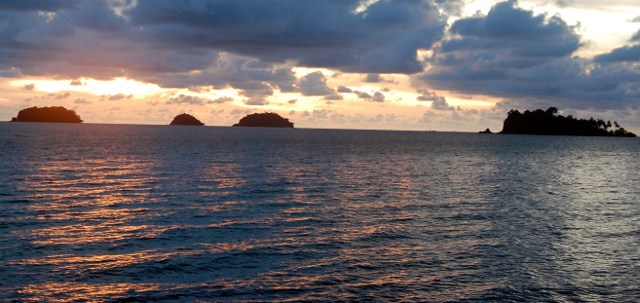
Four Season Regions – Mixing warm and hot destinations as you skip around the globe is ideal from a packing standpoint, especially if you are a family traveling with kids. Since you’ll be carrying as little as possible from the very beginning, and it’s no fun having to buy a heavy jacket to use one week and then leave behind, you should do your best to avoid extreme cold. Extreme heat can also be a drag, but at least sunscreen and a sunhat won’t double the size and weight of your pack.
But there are more subtle considerations. Everyone knows that summers and winters are reversed from the northern to southern hemispheres, but what goes on in the middle isn’t as straightforward as you might expect. If you’ve lived most of your life in, say, Toronto or Melbourne, it would be perfectly understandable to think that the seasons all just switch, and the closer you get to the equator the more constant it becomes. And for the most part, it does work like that, but it’s not always so simple.
Two Season Regions – If you’ve previously visited a tropical region, you are probably aware that instead of four seasons there tends to be two – the dry season and the wet season. But part of the dry season is usually warmer than the other part. The tricky part is that you can’t just look at a map and figure it out for yourself. Things get a bit mixed up, even in places that are relatively close to each other.
For example, the hottest month of the year in Bangkok is April, whereas just a bit south in Jakarta the hottest month is October. Yes, both places have pretty consistent year-round averages, but when you multiply them by their respective wet and dry seasons there can be glorious months and miserable months that take a bit of research to uncover. Dry seasons are almost always best, as some places suffer not only from stifling humidity but also near-constant downpours. Other wet seasons might consist only of some extra mugginess punctuated by a half hour of rain each afternoon.
The point of all this is that it is a good idea to research these things before you’re committed to your timetable. Most guidebooks have helpful charts in them.

High and Low Seasons – The other thing that makes this even a bit more complicated is that busy (and expensive) seasons in many tropical places often correspond more to the seasons where most visitors are coming from rather than going to.
For example, the beach resorts of Goa, India are packed with Western Europeans and Israelis from December through March because they are escaping their winter, but there are great weather months in Goa before and after that. Prices and crowd levels go down outside of that period, but if you are looking for a party you might want to be there in high season anyway.
Bali has a pretty consistent climate, but it gets packed around Christmas and from June through August as Americans and Europeans take advantage of their breaks, and Australians also do in the opposite way. Yet Bali has great weather and lower prices in between these times, so for a RTW traveler, those might be the best times to visit.
Again, the point is that some of these things aren’t as obvious as they might seem, so thirty minutes doing research before you confirm your route might be the difference between a perfectly timed visit and a disastrously timed one.
Shoulder Seasons – Shoulder season, the time on either side of high and low seasons, offer a good alternative for the long-term traveler, particularly those on a tight budget or families looking to slow it down and really dig deep into a culture. While you might assume that traveling in high season is your best bet, keep in mind that prices are always higher and crowds always larger. If you’re on a one-week holiday, then it makes sense to go with the time period where weather is best.
But when you have more time, like on a RTW trip, traveling in shoulder season is something to think about. The crowds aren’t as bad and prices tend to drop. You take a risk with weather – it could be great or it could be bad, but when you have as much time as one does when traveling around the world, especially if you take the slow travel approach, the risks aren’t as large.
Let’s say you’re in Thailand for a month or two during shoulder season and spending time in Bangkok. You want to head down to the islands, but your itinerary is pretty open. You can keep an eye on the weather forecast, and if it’s calling for rain the next few days, go somewhere else or stay put. With long term travel you have the time to wait out a storm, something you don’t have when you’re only gone for a week or two. Once that storm passes, hop on a train and get to the beach!
When to go to expensive countries on your itinerary
There are a couple of things to consider here. The first has to do with your budget. The expensive countries tend to be in a few bunches around the globe, so you want to consider when you’ll be running these gauntlets in terms of your overall budget. If you go over-budget in one region, you might have to really cut back in a region you were actually looking forward to even more.
Some people might want to save their expensive countries for last and other people might want to get them out of the way early to take the pressure off. There is no right or wrong way, but before you lock in which route you’ll be taking, you should give this a bit of thought.
Read The Stopover Secret: How to Get More From Any Trip to learn how you can add some of these expensive destinations to your route for cheap!
When to go to difficult-to-travel-in countries
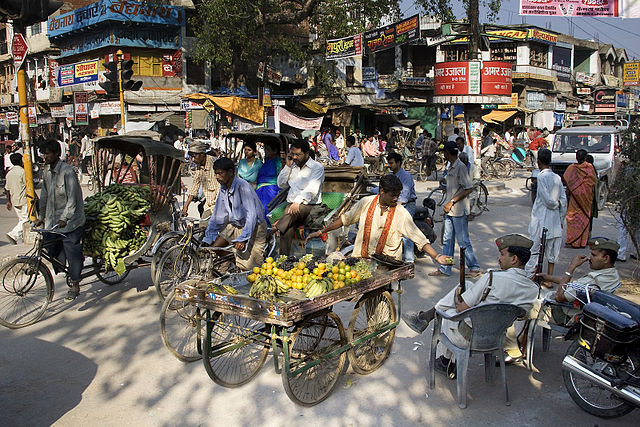
If you’ve never traveled long term before and you have limited international travel experience, common sense might tell you to save those difficult to travel in countries for last. Places like India and Egypt can be maddening, with touts in your face at all times and someone asking you for something around every corner. It can be frustrating and exhausting, so saving places like these for last, after you get some much needed experience, sound like the logical thing to do.
In many cases, this is a bad idea. If this is your first extended trip, you have most likely never experienced travel burnout before. You will suffer from it at some point during your trip, most likely several times. Like with anything you do on a daily basis, at some point you get sick of it, even traveling. By the end of a long trip, you will be exhausted, and you may just be ready for home and normalcy. Throwing yourself into the middle of a chaotic country like India may not be what your weary travel body needs at the end, so placing countries like these in the middle, when you’re firmly in your travel groove, might make more sense.
If you are a traveling family, the age of your kids will factor into this. If the kids are a bit smaller, they will tire more quickly, and you’ll need to think a bit harder about whether or not you’ll even visit these difficult-to-travel-in regions, and if so, when during your trip you’ll go.
Over-planning vs. being spontaneous
You’ll never be able to plan for all the possibilities, and you will very likely make plans for things you’ll later change your mind about. And if you did manage to plan every detail of a long-term trip, you’d likely suck almost all the fun out of it.
But at the same time, the planning, researching, discussing, and rearranging is one of the most enjoyable aspects of the trip for many of us, and there is nothing wrong with that. You’ll meet people who literally figure out a first stop, buy a ticket to get there, and then just wing it, letting the wind carry them in whichever direction it chooses. That might be the right approach for some people, but for many that will rob us of the pleasures involved in research and planning. How can you daydream about your trip if you only have the first stop picked out?
The fact that you are reading this probably means you are someone who enjoys the planning and researching part. The important thing to realize is you’ll be far better off if you remain flexible throughout your trip. Plan all you want, but be prepared to change the plan at a moments’ notice. For example, you might think you want to travel all the way down Central America by bus, but after a week or so you have decided it sucks. Just because you imagined you’d spend 3 weeks on this part of your trip and you told everyone you were going to do it, doesn’t mean it’s a good idea to keep going.
There will be places you like more than you thought you would and places you like much less than you thought you would. Some places will be more expensive than you realized and some other places might seem like bargains when you get there. Weather is always unpredictable, so flights might be grounded due to snow and another area might be on the verge of a blistering heat wave.
You especially need a good balance of over-planning vs. being spontaneous when you add kids to the mix because you just never know when they’re going to need a break. Having 3 or 6 or 9 or 12 months completely planned out when traveling with kids is probably a recipe for disaster. On the flip side, just buying one ticket and going might prove to be difficult as well (obviously this is dependent on the age of your kids and your unique family make-up).
If you map out your every move in advance and rigidly try to keep to it, you’ll be putting yourself through some needless hardship. For many of us, half the fun of a trip like this is the planning part, but the other half is just being out there slipping through the world and making things up as you go. You can have the best of both worlds and strike a balance between planning the whole trip out and planning nothing.
Visas
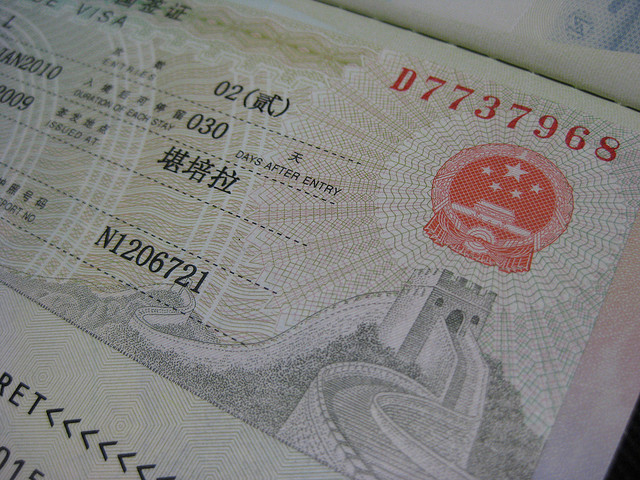
You’ll need a valid passport to enter pretty much every country on earth, and in quite a few you’ll also need a separate visa. In case you’ve never needed to go through this before, a visa is permission from a foreign government to enter their country, usually in the form of a paper stamp or sticker in your passport.
And it gets even more complicated. In some cases you might have to apply in person at their consulate office in another country long in advance, go through an application process, pay a fee that could range from small to surprisingly large, provide two passport-size photos, and then wait for an answer. In other cases you can literally walk off a plane in that country, hand them your passport and a very small fee, and instantly be on your way with a new visa sticker in your passport as a souvenir.
The point is you should take a bit of time to research each country you might consider entering and then make some notes. Of course, if you are from the US, Canada, EU, or Australia, you can move about pretty freely in these areas, but some of the places you’ll need a visa for can be surprising.
For example, if you are a US resident you can enter Peru with just a passport and a smile, but for Brazil and Bolivia you’ll also need a visa, and there is a high price tag attached to each. You can enter Thailand with just a passport, but India requires a pricey visa as well.
In some cases you can apply for a visa from your home country long before you leave, but in other cases you have to enter within a certain window of time after it’s been issued or it becomes invalid. These rules do have a tendency to change, and this is not something to be taken lightly. You might even choose to cross some countries off your list due to strict requirements or expensive visas.
Volunteering and working
If your trip plans involve volunteering or working, then you at least need to research it before leaving if not sorting it out all together. Like most anything concerning planning a trip like this, everything depends on each person’s unique situation. If you plan on doing something like teaching English while on the road, you may want to start looking for work before you leave, especially if you plan on getting a legit job as opposed to working under the table. You’ll need to prove that you have a university degree, and in some cases, a certificate to teach ESL (English as a Second Language), so make sure you’ll have access to those. The same goes for volunteering. Some companies require you to get everything set up before leaving, but many allow you to turn up and start (many of these you won’t even find online – you find them when you’re on the road).
Planning Your Route Checklist
You can use all this information regardless of which flight option you choose. Just keep in mind that if you choose to purchase a RTW ticket, you will have to plan more by default. If you choose buy as you go, you can theoretically just buy a ticket and go.
- Consider if you want to travel in summer, fall, spring, or winter in each region you plan to visit
- Consider high, low, and shoulder seasons when planning your itinerary
- Consider hot and dry season and the rainy and monsoon seasons for tropical regions
- Develop a tactic for visiting the more expensive regions on your itinerary
- Develop a tactic for visiting the more difficult to travel in regions on your itinerary
- Develop a tactic for planning vs. being spontaneous, keeping an open mind that this will most likely change once you’re on the road (many times)
- Sort out visas that you are able to before you leave
- Be aware of what you need for visas you have to get on the road (bring plenty of passport sized photos)
- If you plan on working or volunteering, research what you need to make it happen

